In the demanding world of Roll-to-Roll (R2R) manufacturing, precise real-time diameter measurement is critical. FrankMEC is proud to present our latest R&D breakthrough: an integrated system combining Computer Vision (CV) and Machine Learning (ML) for intelligent rewinder control.
1. Addressing Technical Limitations
Traditional diameter estimation relies on mathematical integration of RPM and material thickness. However:
- Cumulative Errors: Material variations and high-speed stretching lead to significant calculation drifts.
- Control Instability: Open-loop architectures lack the responsiveness to handle non-linear tension fluctuations.
- Research Goal: To implement a dynamic, non-linear intelligent control scheme using real-time visual telemetry and predictive modeling.
2. Technical Architecture & Methodology
Our experimental platform bridges the gap between industrial automation and advanced data science:
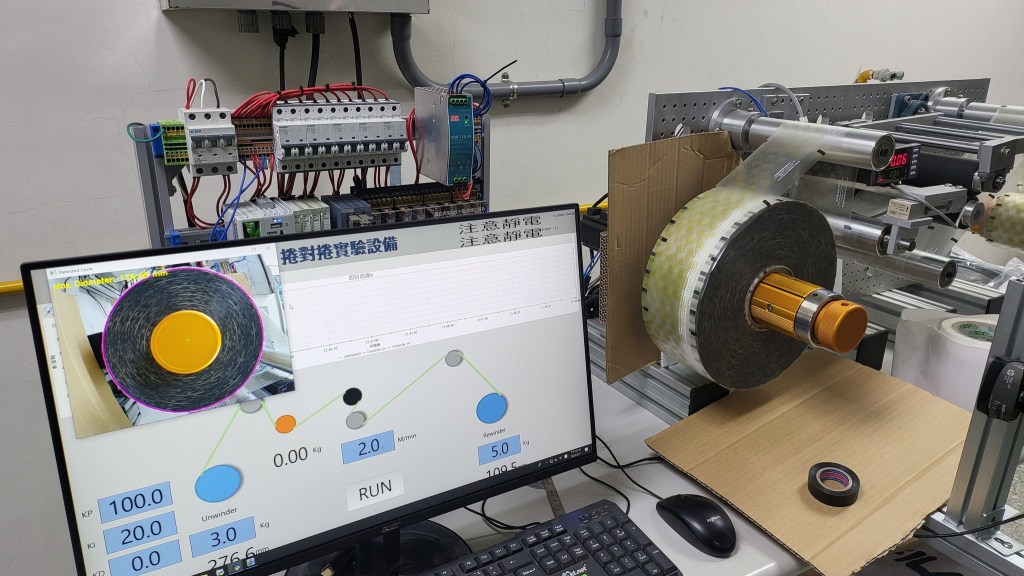
- Control Backbone: A 3-axis servo system managed by Codesys PLC via a high-speed EtherCAT network.
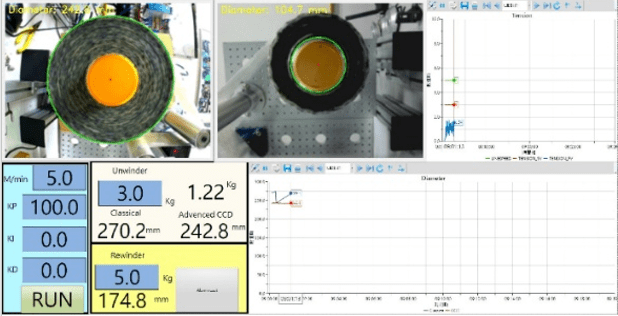
- Vision Processing: A dedicated Python + OpenCV framework for real-time edge detection and core tracking.
- Advanced Data Processing: * Moving Average (MA) filters for signal noise reduction.
- LSTM (Long Short-Term Memory) neural networks to predict winding dynamics and pre-emptively adjust tension parameters.
3. Outcomes: The Evolution of Smart Tension Control
The implementation of this system has yielded transformative results:
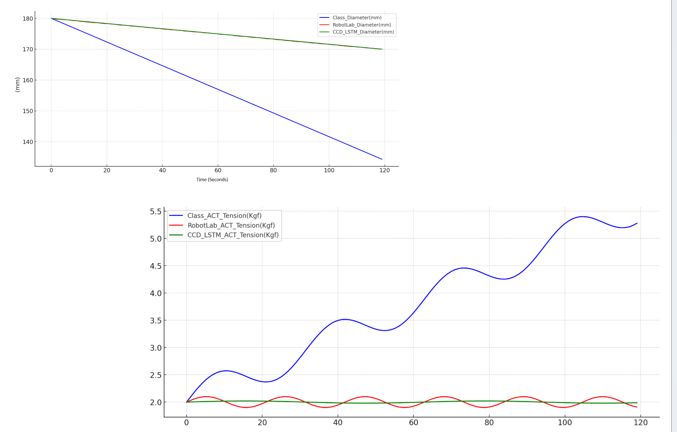
- Precision Tracking: The vision module captures diameter changes with high accuracy, unaffected by material transparency.
- AI-Driven Compensation: The LSTM model optimizes inertia compensation during speed ramps, ensuring superior tension stability.
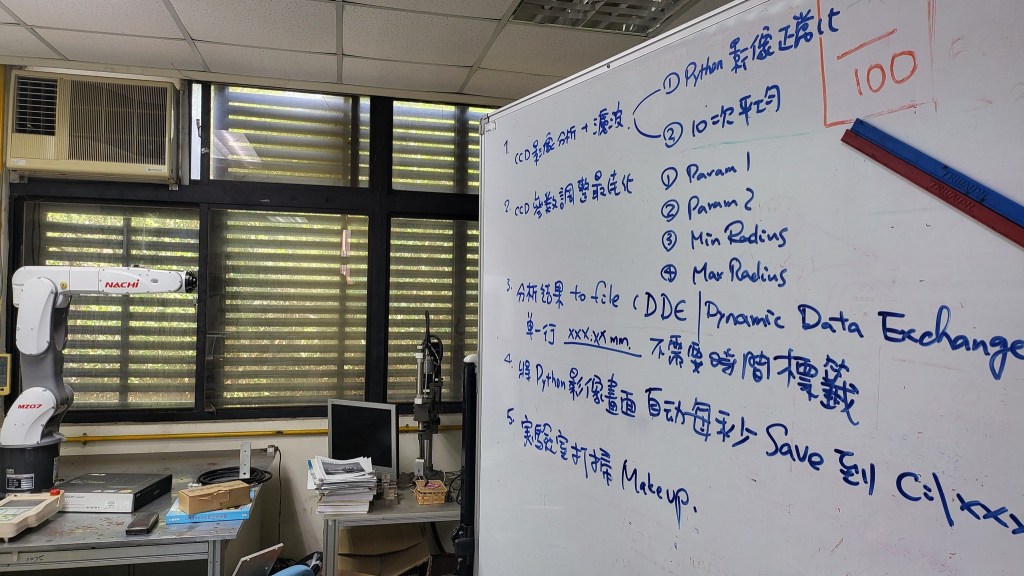
- Integration: Python-based analysis is streamed back to the PLC via DDE (Dynamic Data Exchange), creating a closed-loop smart ecosystem.
At FrankMEC, we don’t just build machines; we give them the power of perception for a truly data-driven future.
 法藍克機電 Frank Mechatronics
Leave a comment