In the design of modern smart buildings, balancing “occupant comfort” with “energy management” has become a core challenge. Recently, we successfully implemented an integrated smart monitoring solution, providing fully automated management for dehumidification systems and air conditioning (HVAC) across multiple floors.
To ensure system stability and scalability, we utilized industry-standard communication protocols tailored to specific equipment:
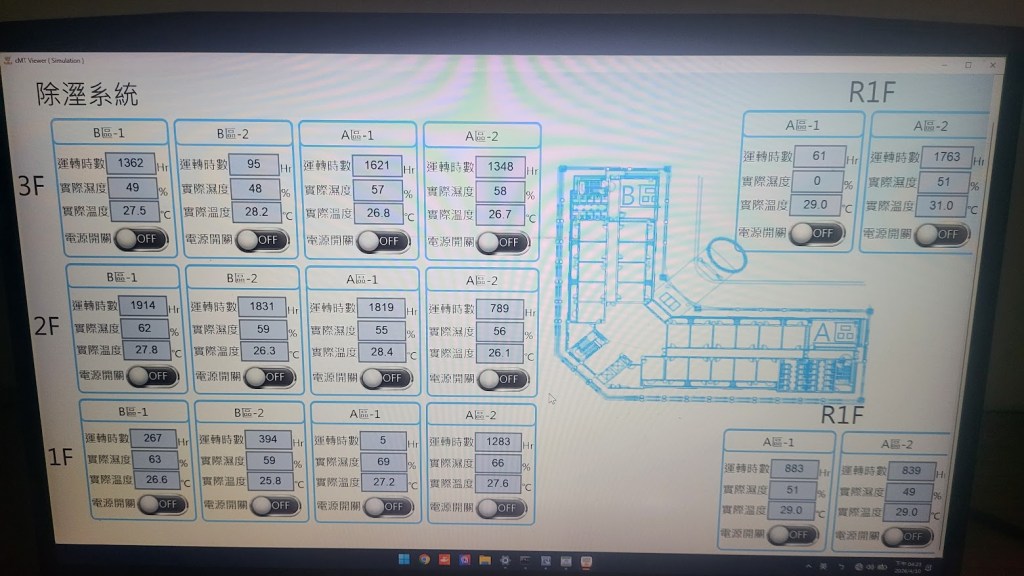
- Dehumidification Monitoring (MODBUS TCP): Dehumidifiers across various floors (1F to 3F, Areas A & B) are connected to the central management system via MODBUS TCP. Through the monitoring interface, administrators can track “Run Hours,” “Current Humidity,” and “Ambient Temperature” in real-time. This data allows the system to execute precise Time Scheduling, preventing unnecessary operation during unoccupied hours.
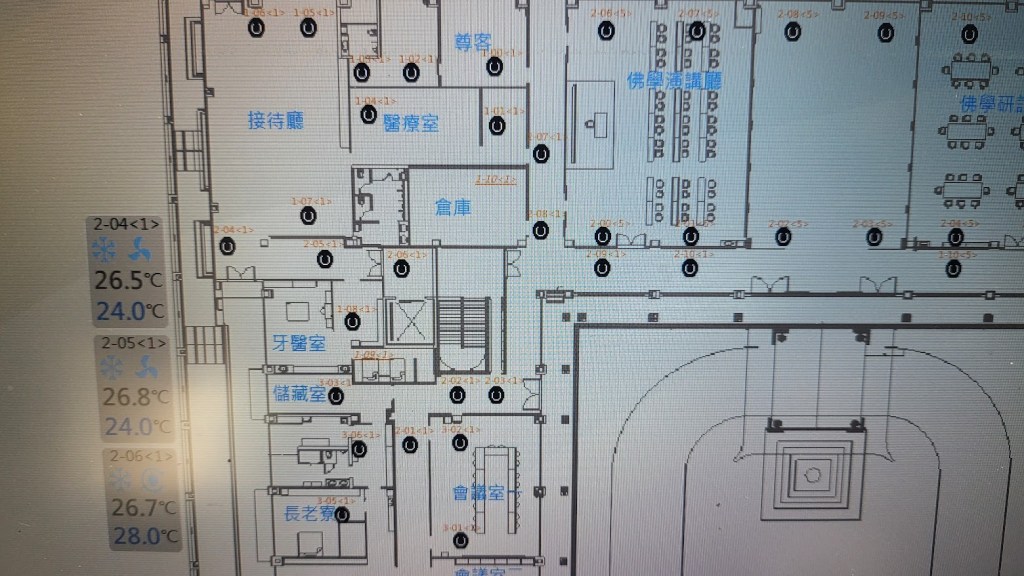
- Air Conditioning Control (BACnet): For indoor spaces such as conference rooms, medical clinics, and reception halls, we employed the BACnet protocol—the gold standard in building automation. This enables remote control over power, mode, and temperature settings for every unit, integrating them into a unified Energy-Saving Management strategy.
Smart Scheduling and Carbon Reduction
This system is built not just for convenience, but for sustainability.
- Precision Humidity Control: By using real-time sensor data, the system activates dehumidification only when levels exceed set thresholds, significantly reducing power consumption compared to “always-on” traditional setups.
- Energy-Saving Strategies: Through automated scheduling, the system adjusts HVAC output based on peak/off-peak hours. Switching to eco-modes during late-night hours directly contributes to carbon footprint reduction.
- Preventive Maintenance: By tracking “Run Hours,” maintenance teams can proactively schedule filter cleanings or parts replacements. This ensures equipment operates at peak efficiency, extending its lifespan and reducing electronic waste.
 法藍克機電 Frank Mechatronics
Leave a comment